
Basilicata
Beyond the city of Matera and the towns along the Ionian coast, Basilicata's hinterland offers a complex and varied topography, dominated by Apennine mountain ridges, clayey gullies, and vast wooded areas. This region preserves unique geological complexes and historic villages that testify to its profound geographic isolation, which has now become a key factor in preserving the beauty of the landscape.
The Lucanian Dolomites
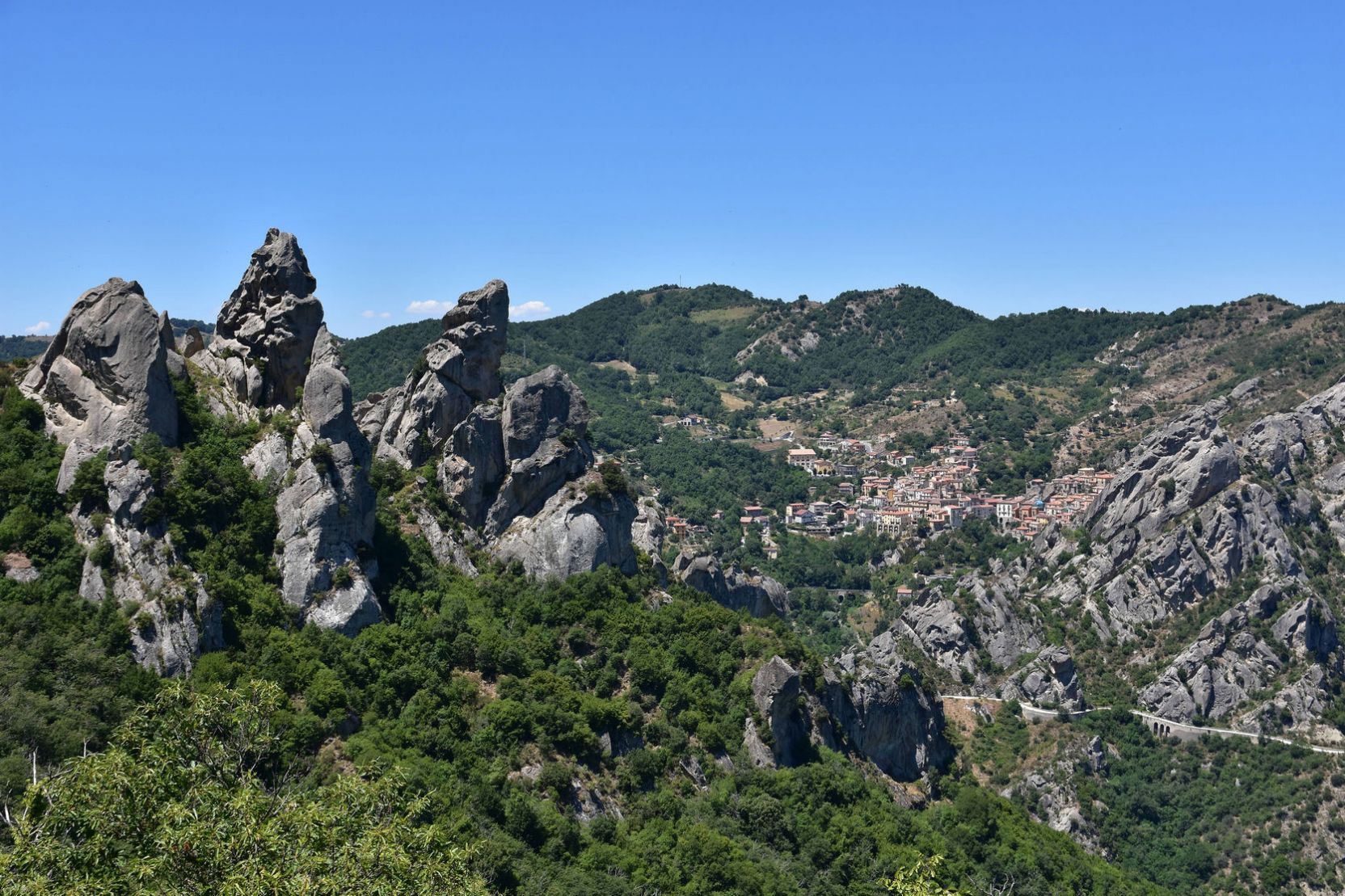
The Lucanian Dolomites are an extraordinary mountain range characterized by spectacular sandstone spires and pinnacles dating back to the Miocene. Located in the heart of the Gallipoli Cognato Piccole Dolomiti Lucane Regional Natural Park, these mountains are home to two mirror-image villages, perched directly on the rock faces and joined by deep geological valleys.
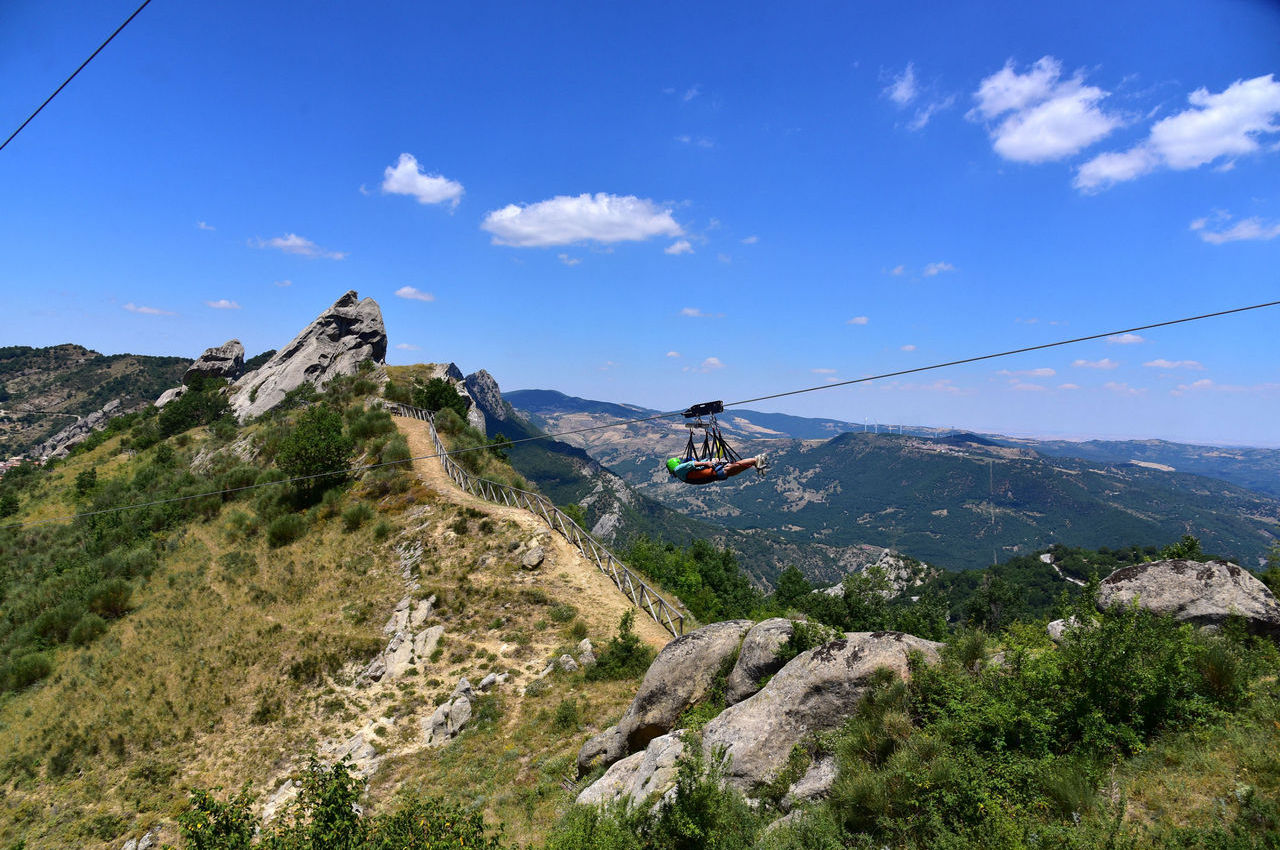
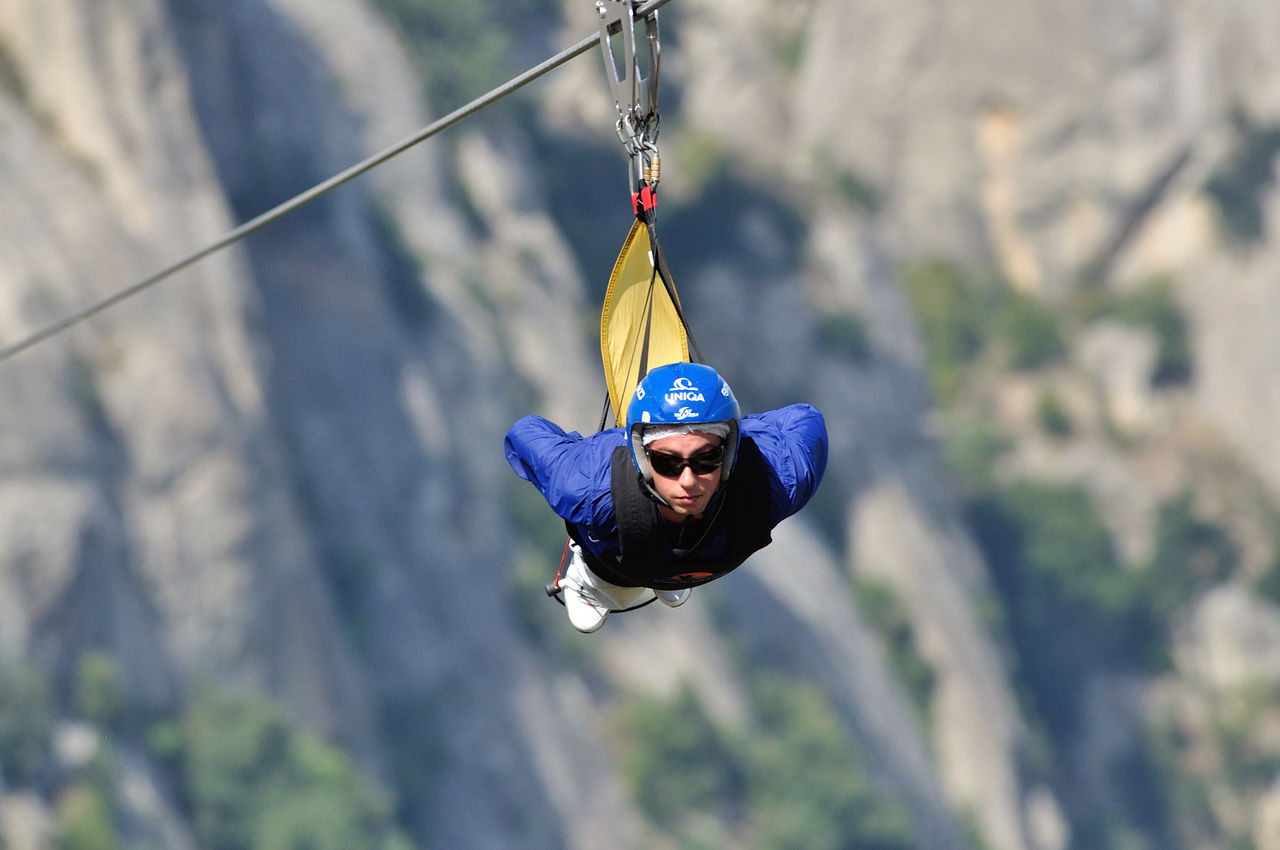
These mountains are characterized by the presence of two of the most beautiful villages in Italy, Pietrapertosa and Castelmezzano, nestled close to the peaks, forming a landscape of rare beauty. They are connected by the Volo dell'Angelo cable car, an attraction that allows visitors to take a flight through the space between the peaks of the Lucanian Dolomites.
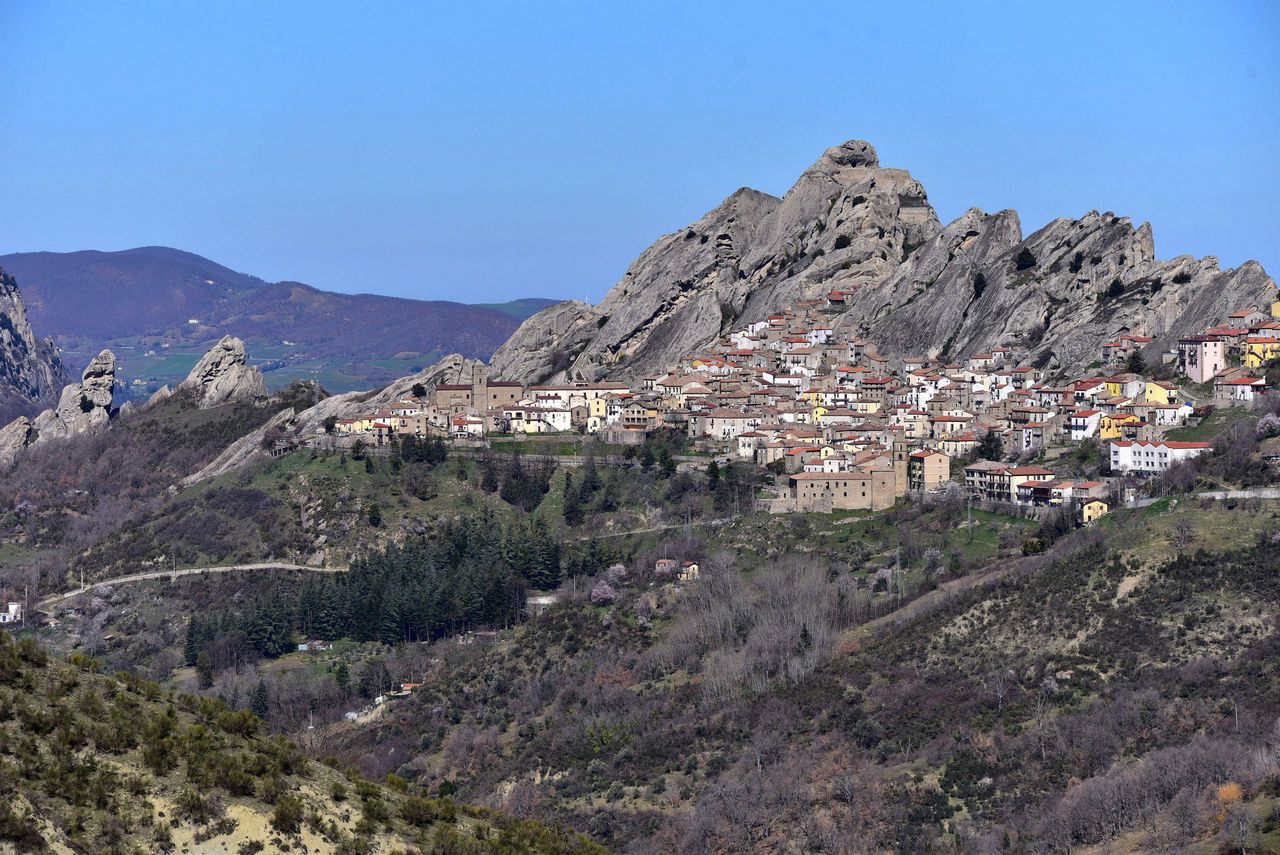
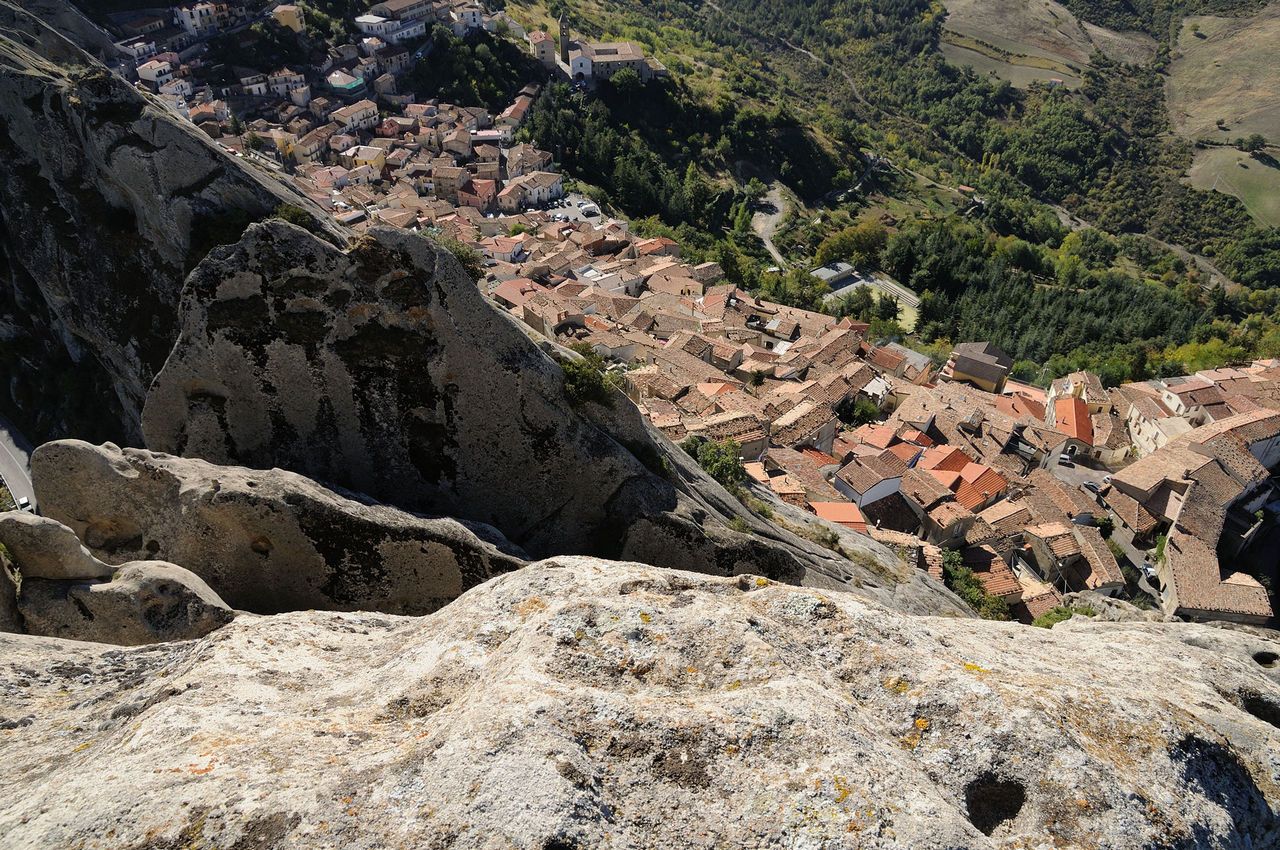
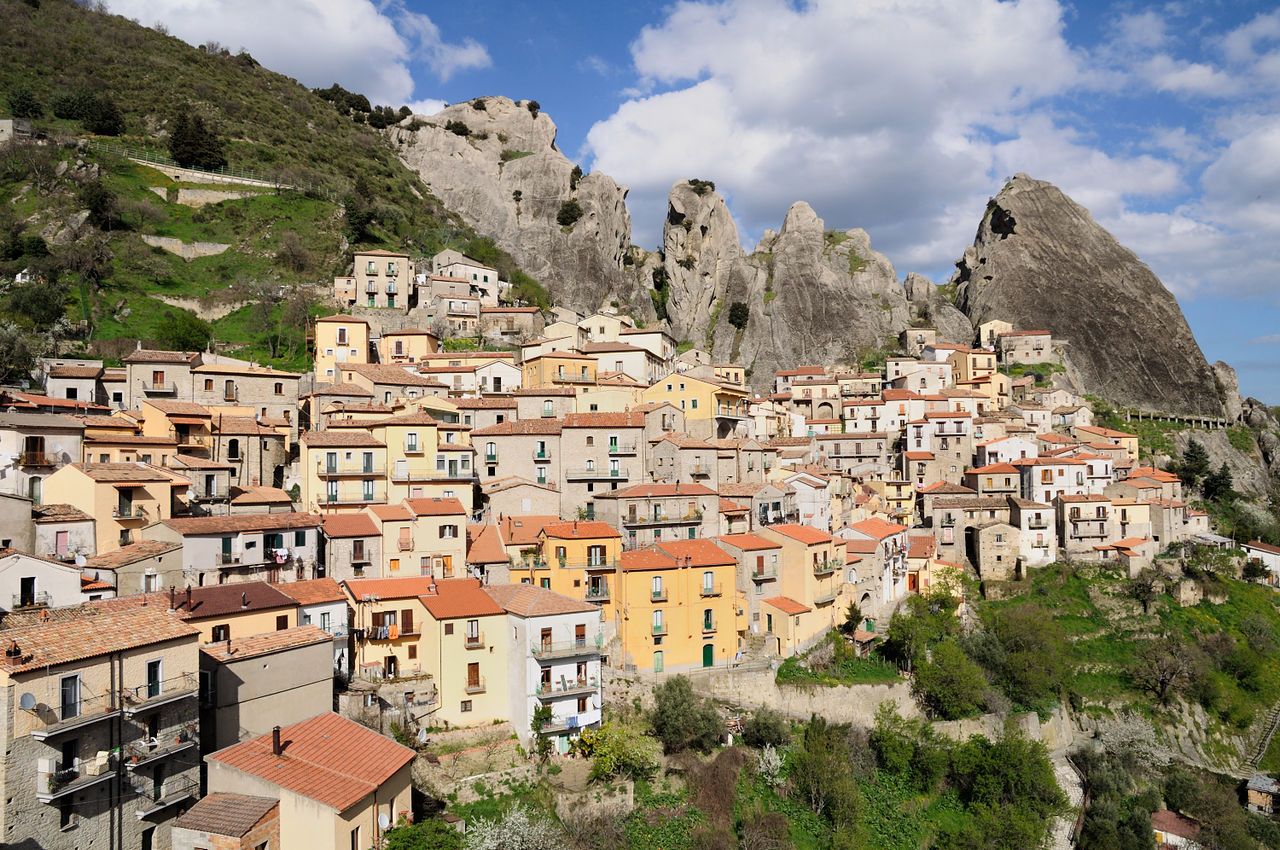
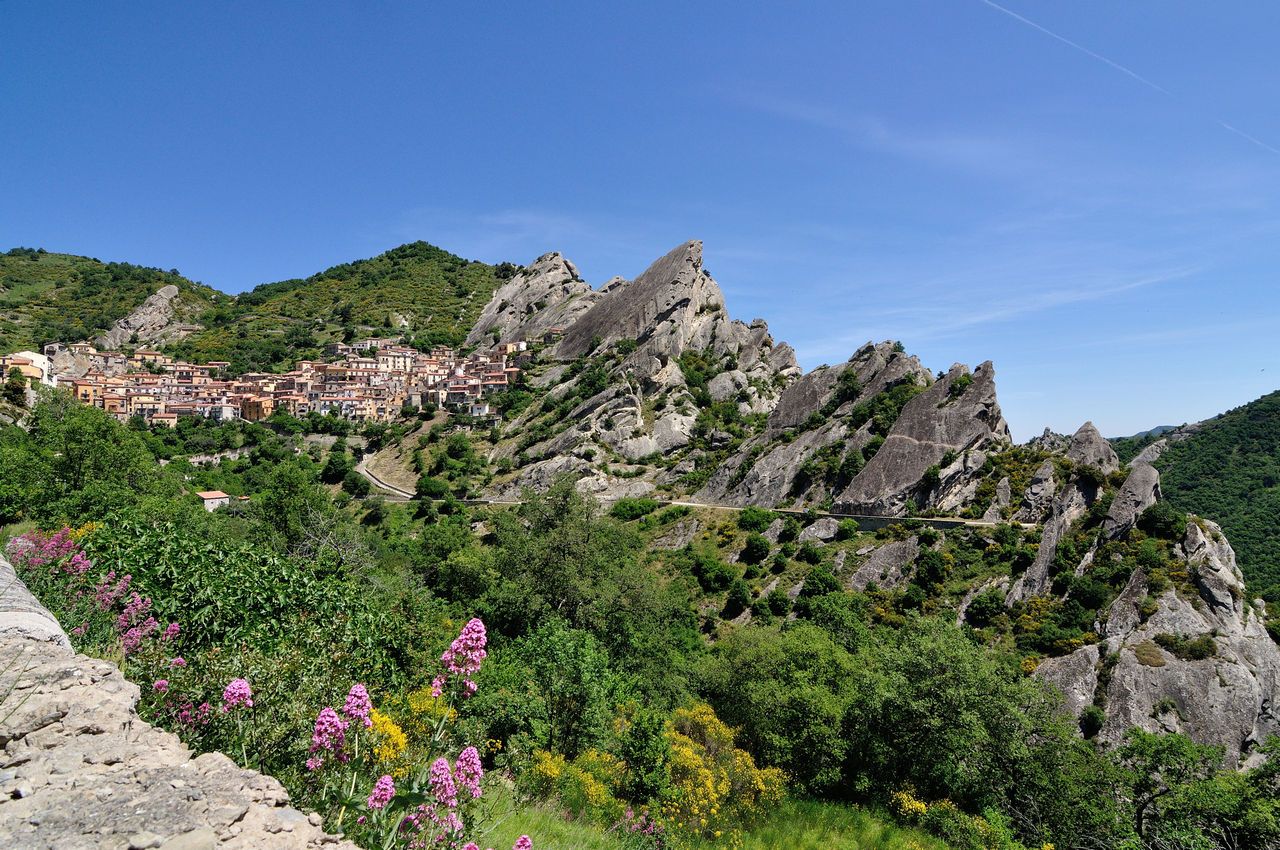
Pietrapertosa and Castelmezzano
The two small Lucanian villages perched atop the Lucanian Dolomites are Pietrapertosa and Castelmezzano, both in the province of Potenza and both within the Gallipoli-Cognato Piccole Dolomiti Lucane Regional Natural Park.Pietrapertosa
It is the highest municipality in Basilicata, located 1,088 meters above sea level. The village displays a clear historical stratification, starting with the Arabata, the oldest neighborhood founded in 838 by the Saracens, characterized by dead-end alleys, stone labyrinths, and houses clinging to the rocks. The Saracen-Norman Castle: A rock fortress that exploits the natural conformation of the peaks as a defensive barrier. It houses a rainwater collection tank and a series of lookout posts carved into the rock.
Castelmezzano
The village is nestled in a natural rock amphitheater. The dwellings are built directly into the limestone and sandstone steps, following the vertical slope of the hill. Of note are the 13th-century Mother Church of Santa Maria dell'Olmo and the remains of the ancient Norman-Swabian fortress, accessible via a staircase carved into the rock that leads to the highest point of the spire.
The Flight of the Angel
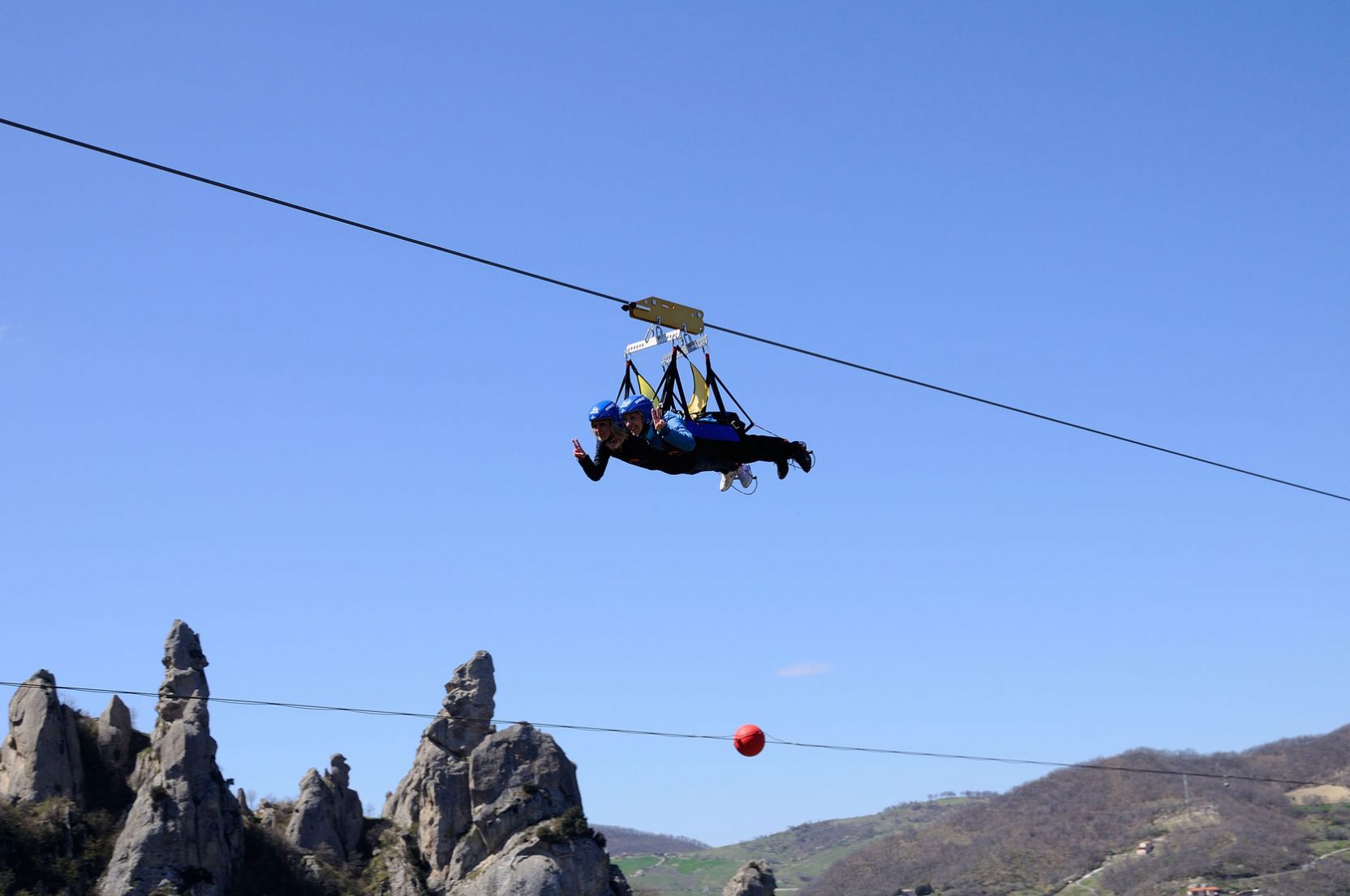
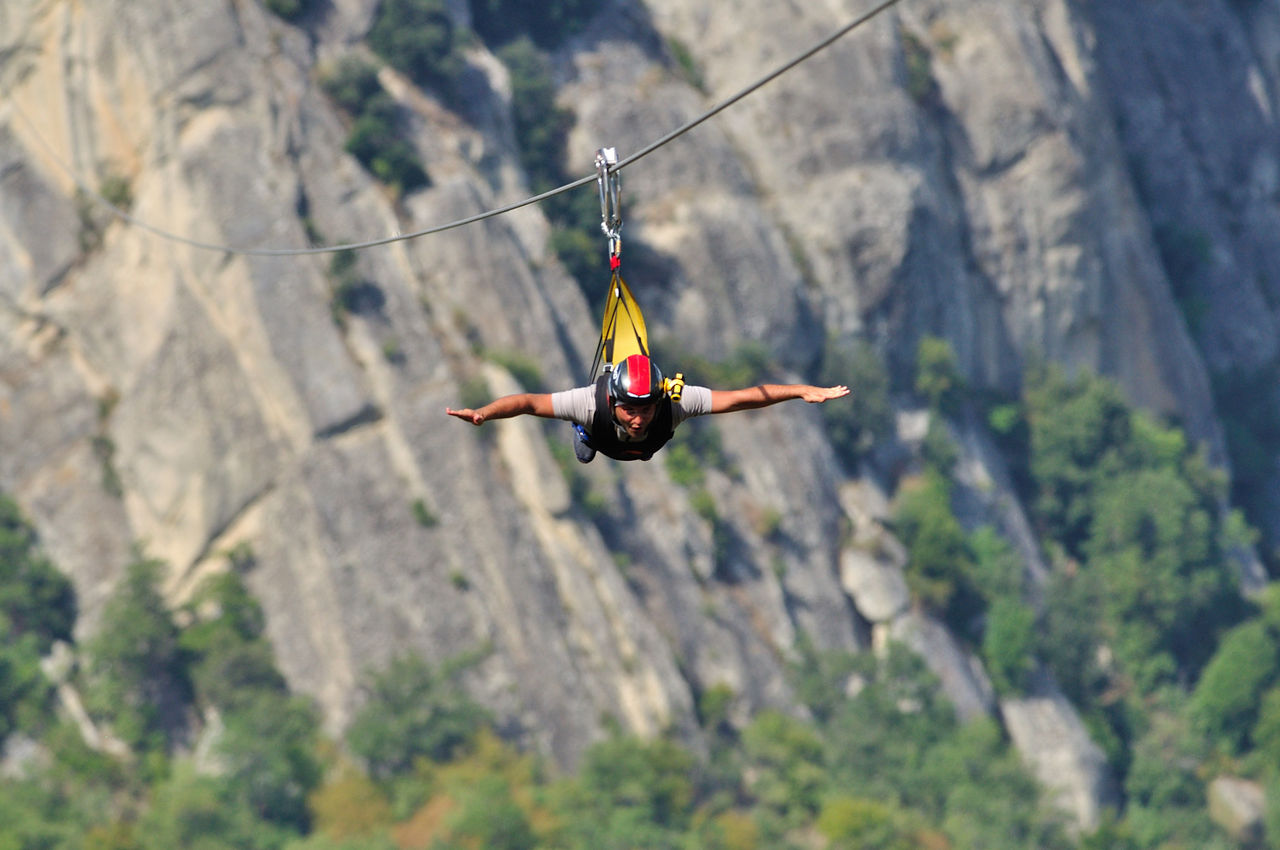
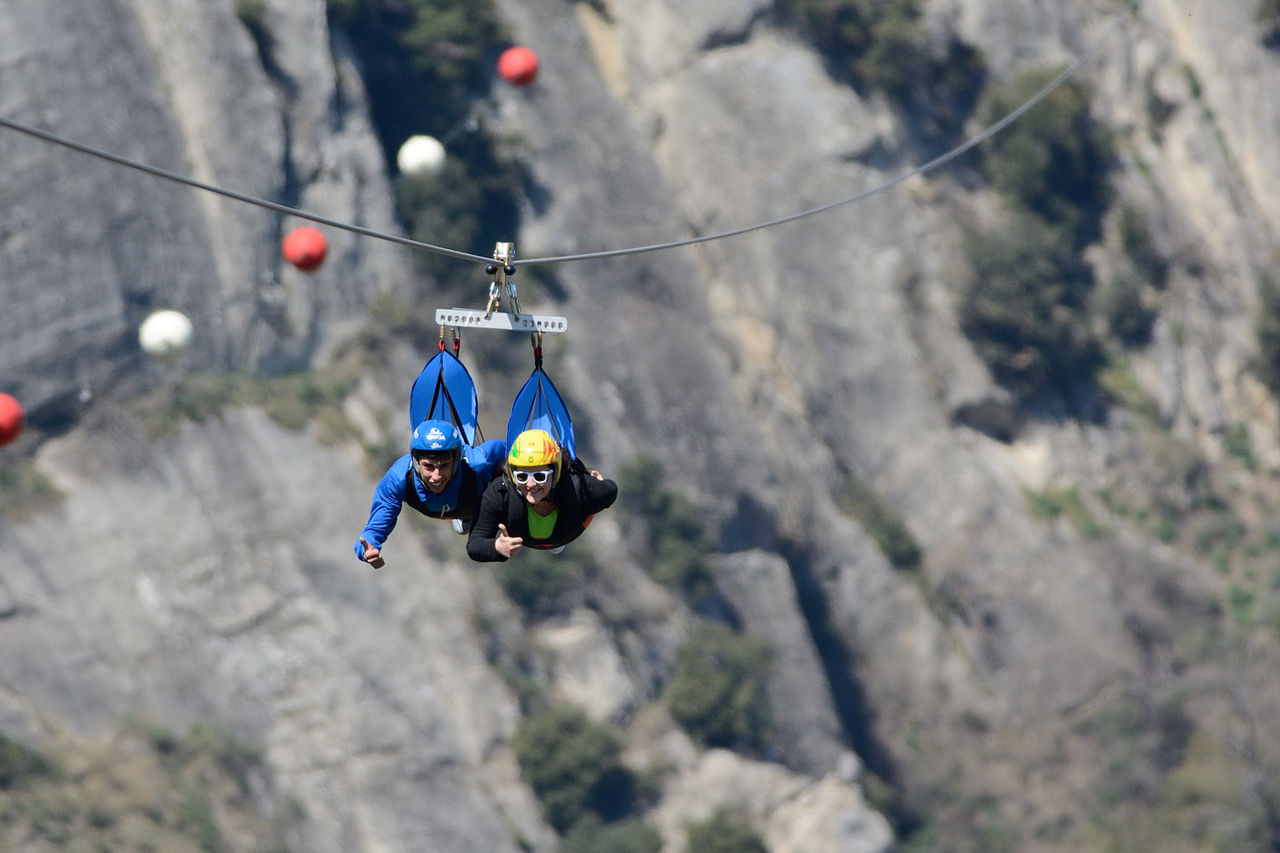
The two villages at the top of the Lucanian Dolomites, Pietrapertosa and Castelmezzano, are connected by the Angel's Flight, a top-notch tourist facility. It consists of a steel zipline strung between the peaks of the two towns: the first line connects Pietrapertosa to Castelmezzano (1,415 meters long, maximum speed 120 km/h), while the second line runs the other way (1,478 meters long). For hikers, the towns are connected by land by the Sentiero delle Sette Pietre, a literary and nature trail that descends to the bottom of the Caperrino stream valley, and by two via ferratas (Ferrata Salemm and Ferrata Marcirosa).
Tickets and Reservations
You can purchase Angel's Flight tickets and vouchers online
Il Parco della Grancia
Located in the Brindisi Montagna area (Potenza), the Grancia Historical Rural Environmental Park extends over 50 hectares of monumental forest and is Italy's first historic park. The site is built around the structures of the ancient Grancia di San Demetrio, historically a fortified monastic farm belonging to the nearby Certosa di San Lorenzo.
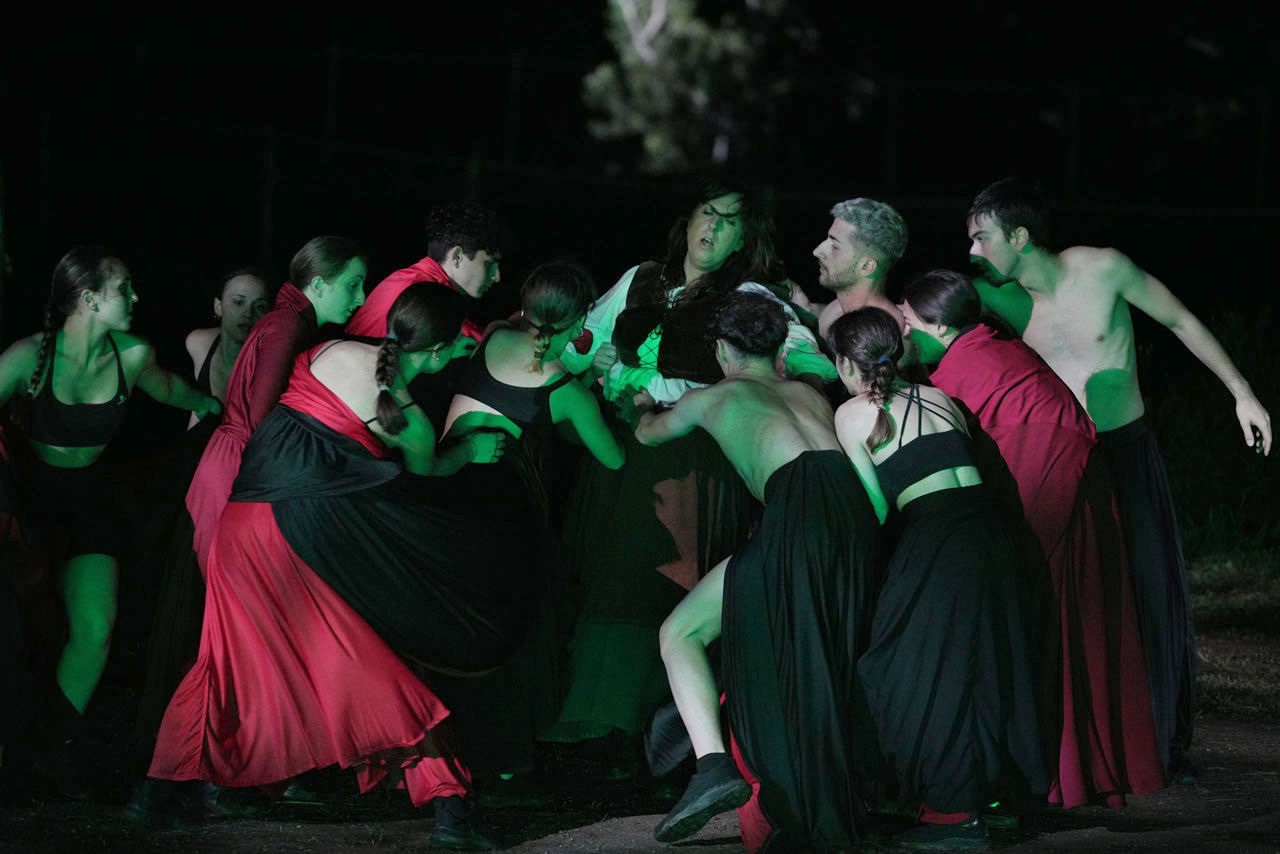
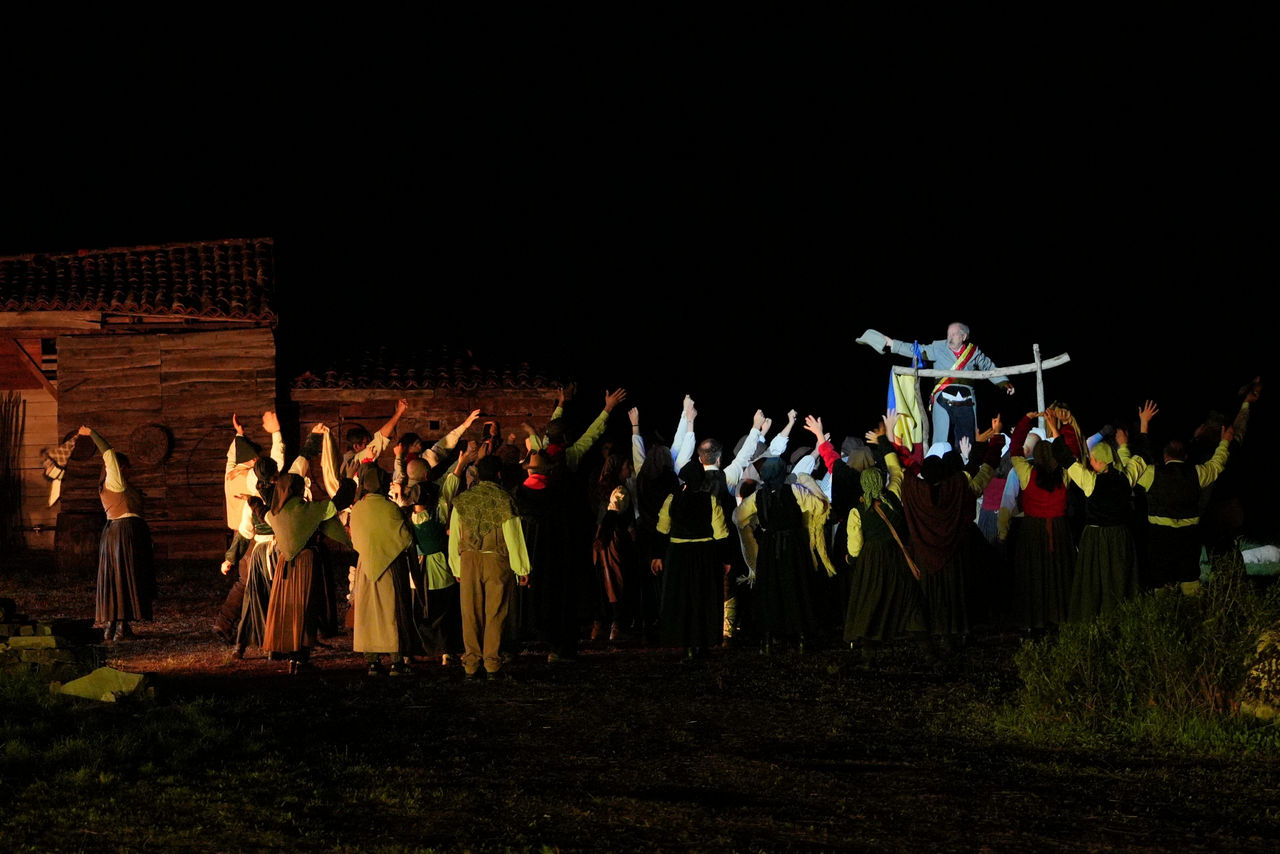
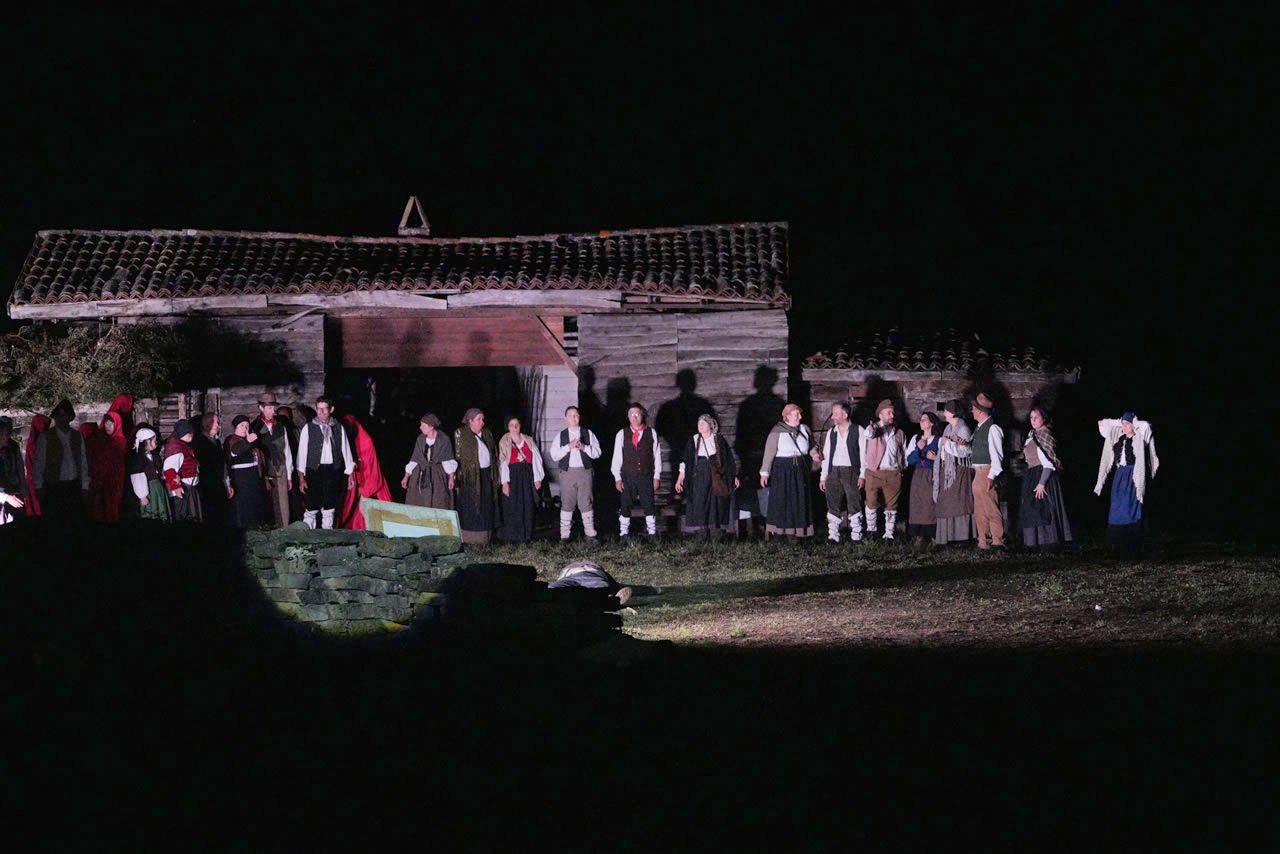
The Cinespettacolo La Storia Bandita
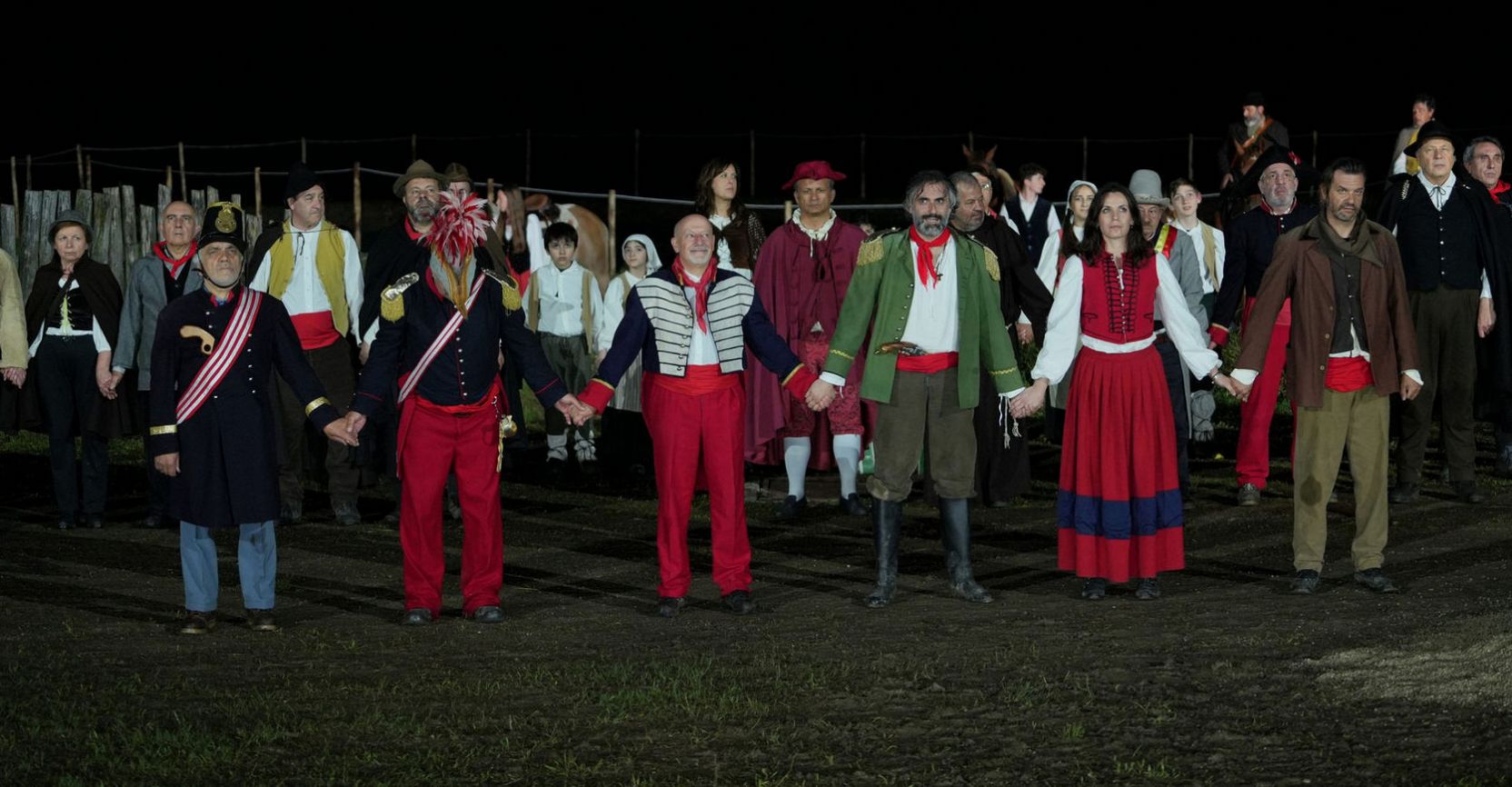
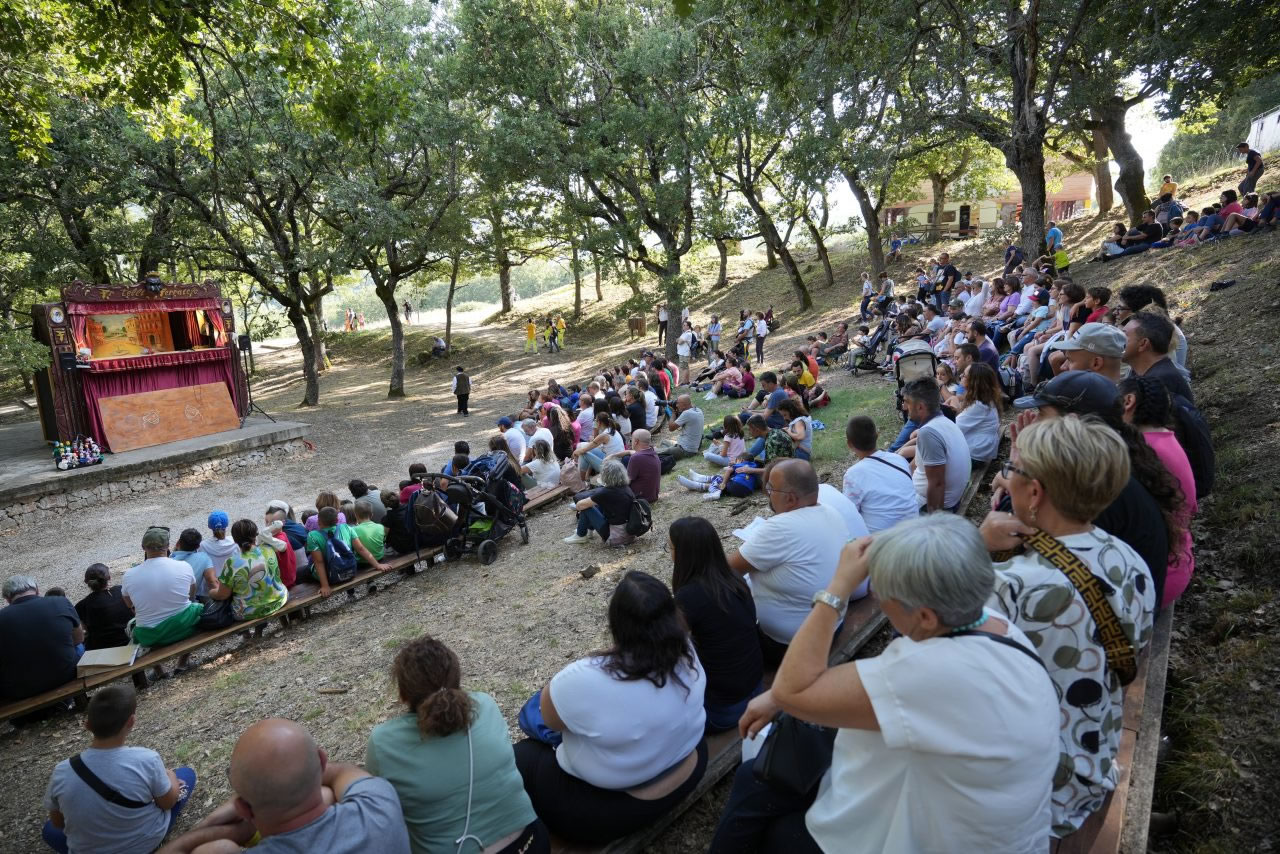
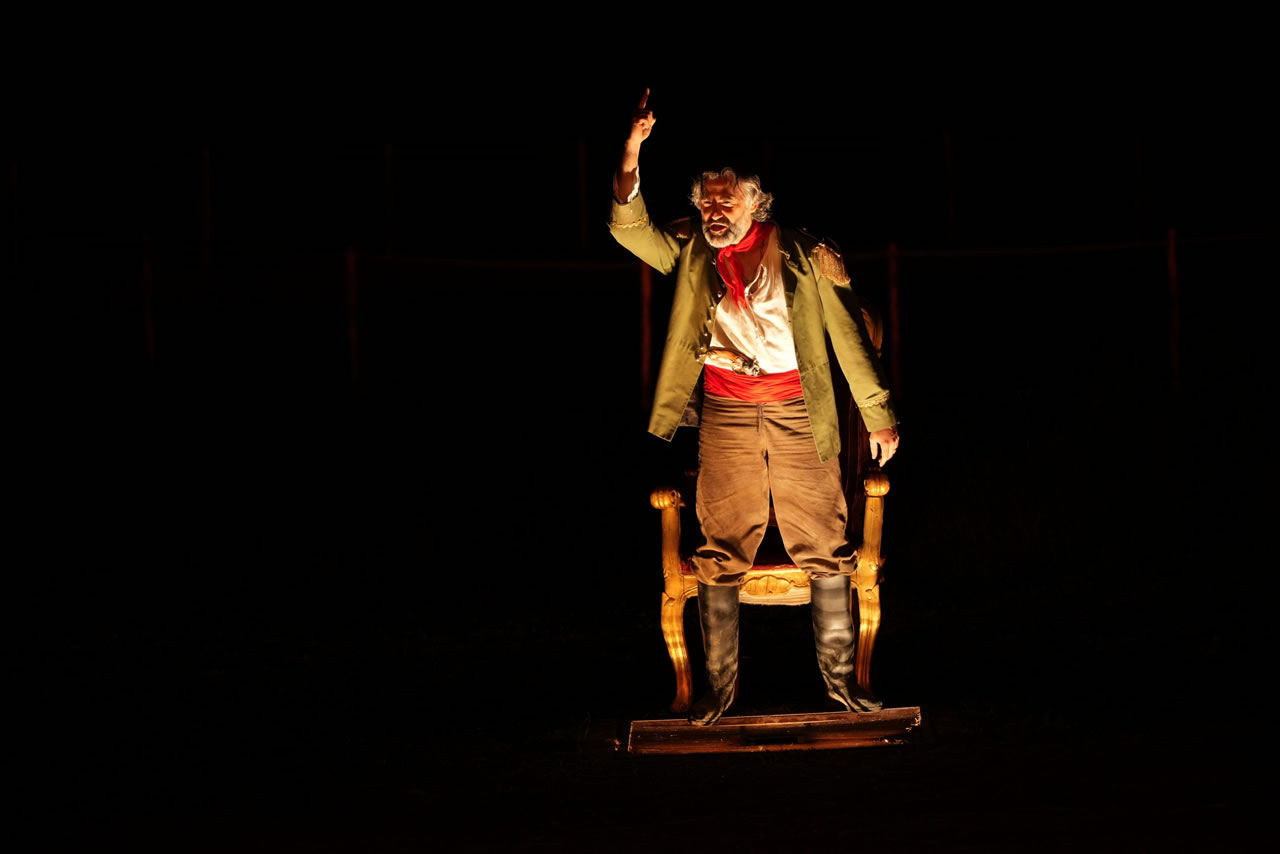
This is the park's main cultural highlight. It is a large-scale open-air multimedia show performed in a 25,000-square-meter natural amphitheater surrounded by woods. Through the action of hundreds of extras, special effects, projections, and cinematic technology, the history of post-unification Lucanian banditry (1861-1864) is reconstructed, analyzed from the social perspective of the rural populations of the time.
Environmental activities
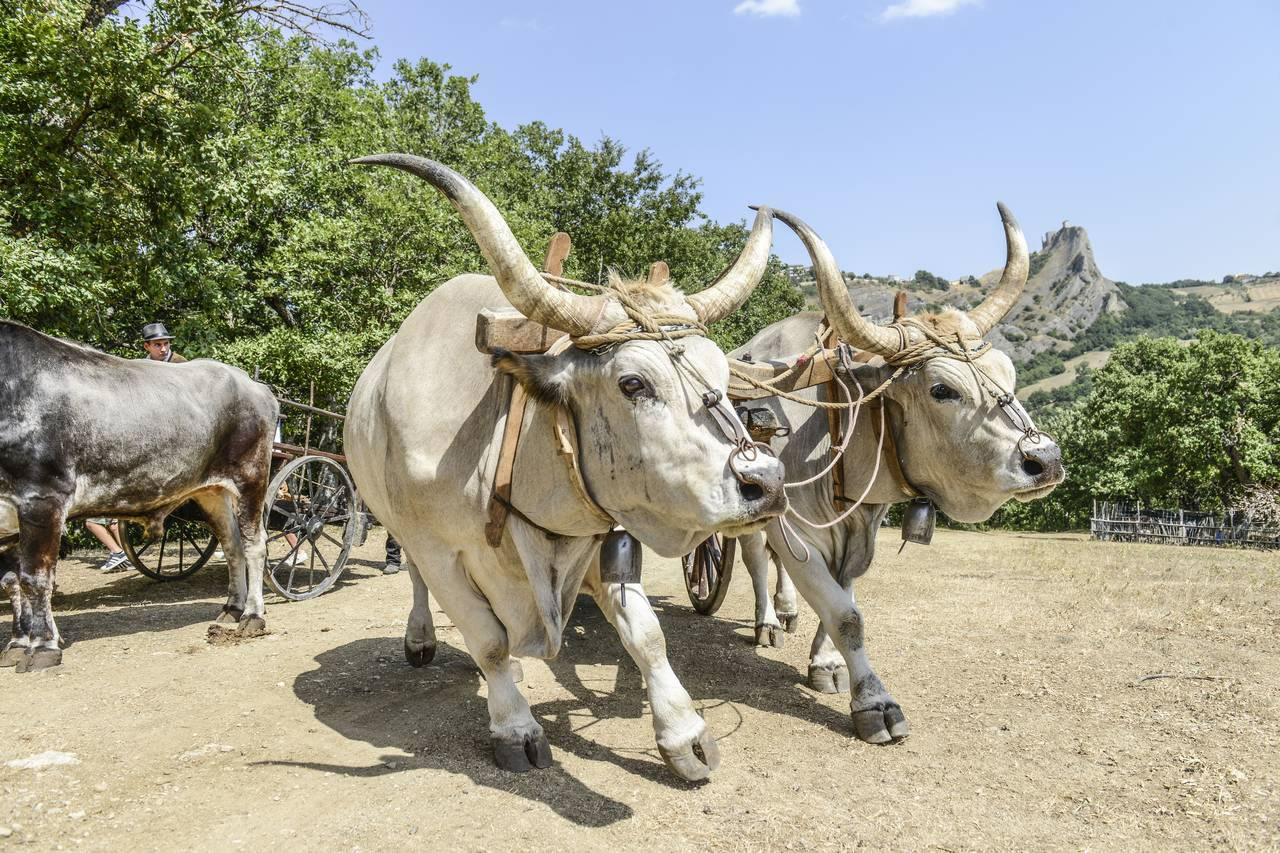
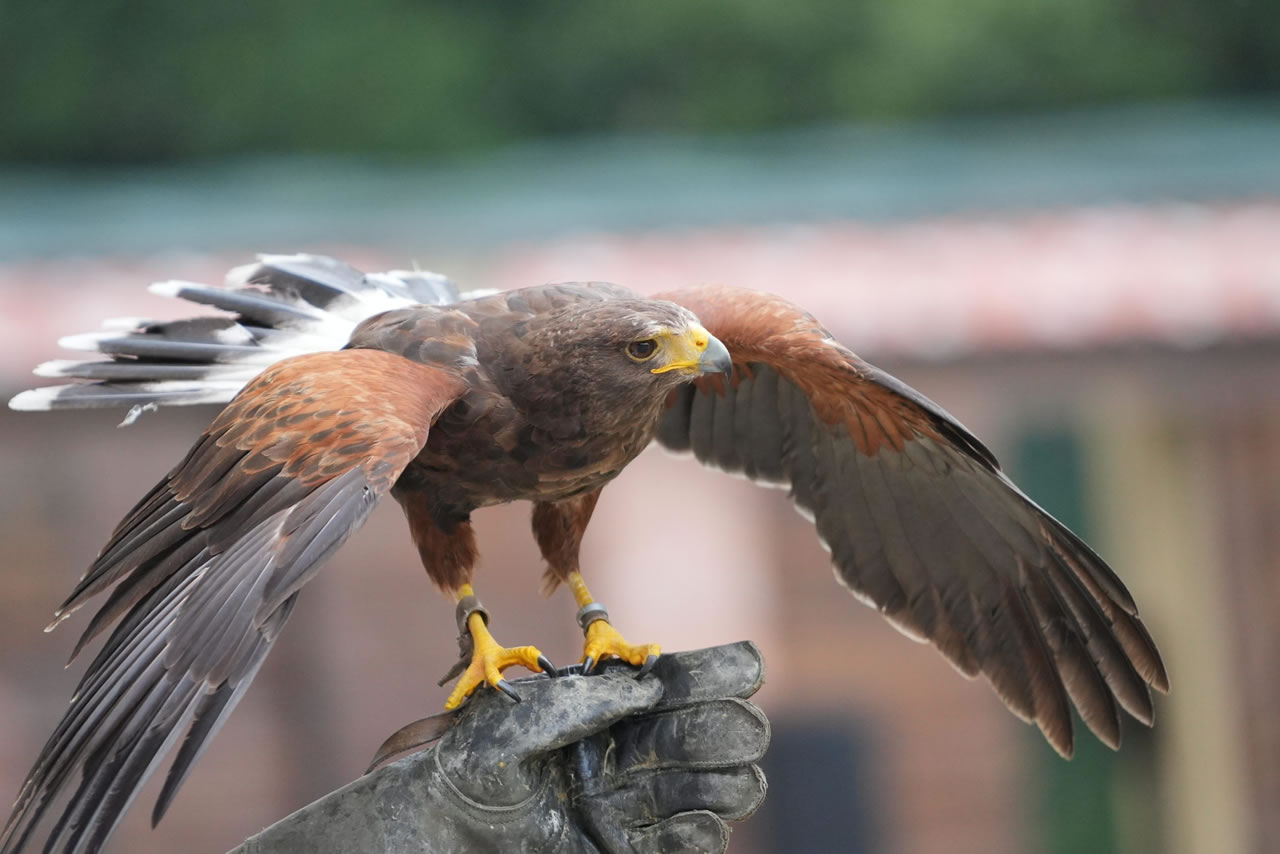
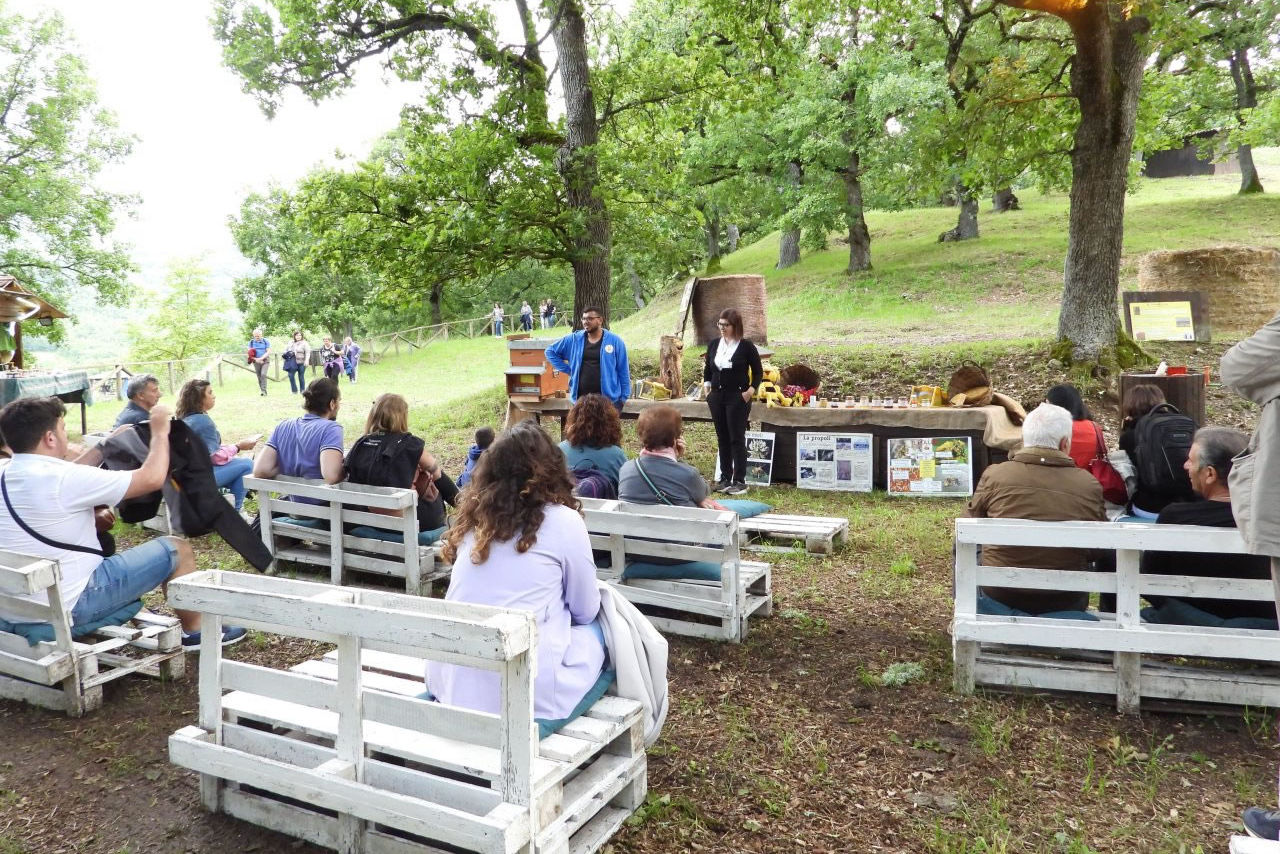
The park functions as a hub for the preservation of rural traditions. It houses a falconry center where hunting and training techniques dating back to the time of Frederick II of Swabia are demonstrated. There are also guided nature trails through the oak forest and areas dedicated to promoting local livestock biodiversity.
Tickets and reservations
Tickets for the Grancia Park and the Cinespettacolo can be purchased online
Craco, the Ghost Town
Located in the province of Matera, in the hilly hinterland before the Ionian Coast, Craco is one of the rare examples in Europe of a completely abandoned medieval village, yet preserved intact in its original structure.Hit by a geological landslide in 1963, the village was evacuated for the next ten years until 1974. Today, it is a protected Museum Park.
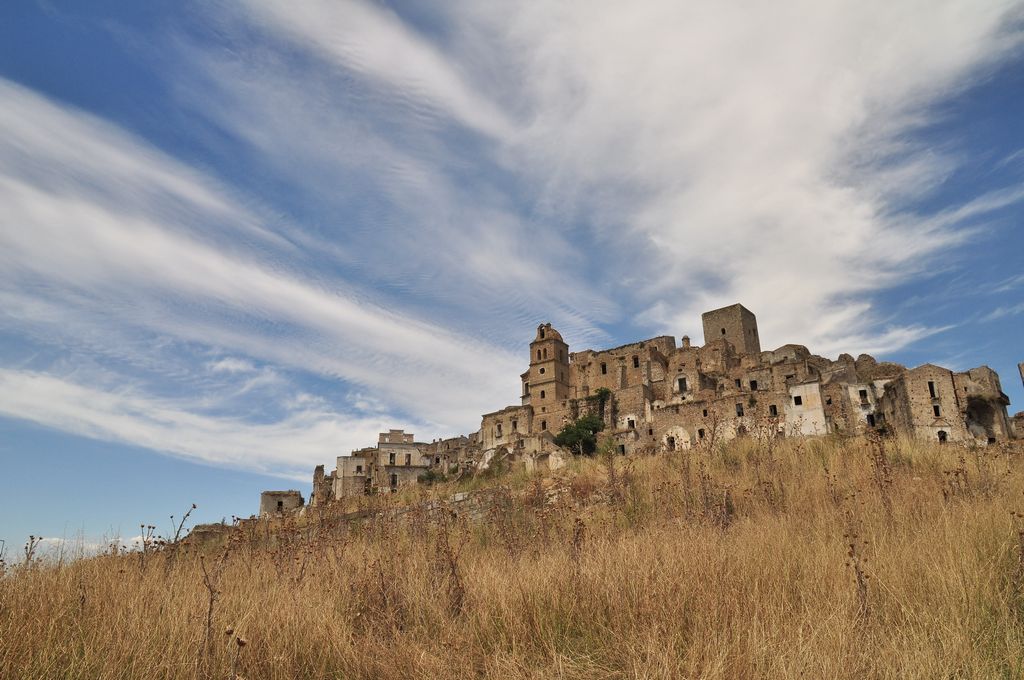
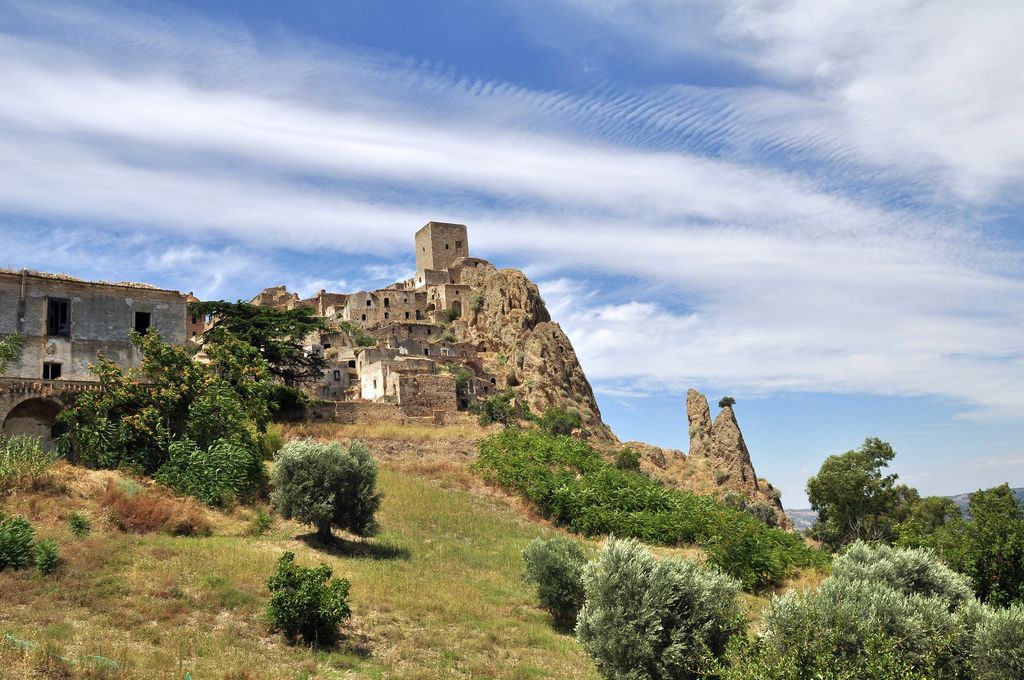
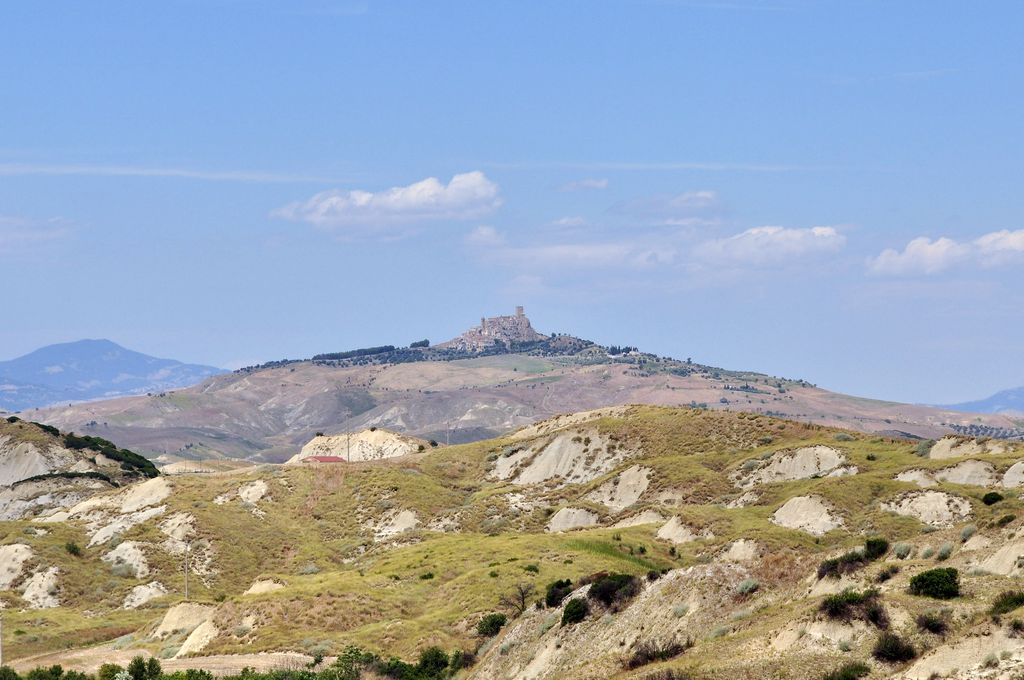
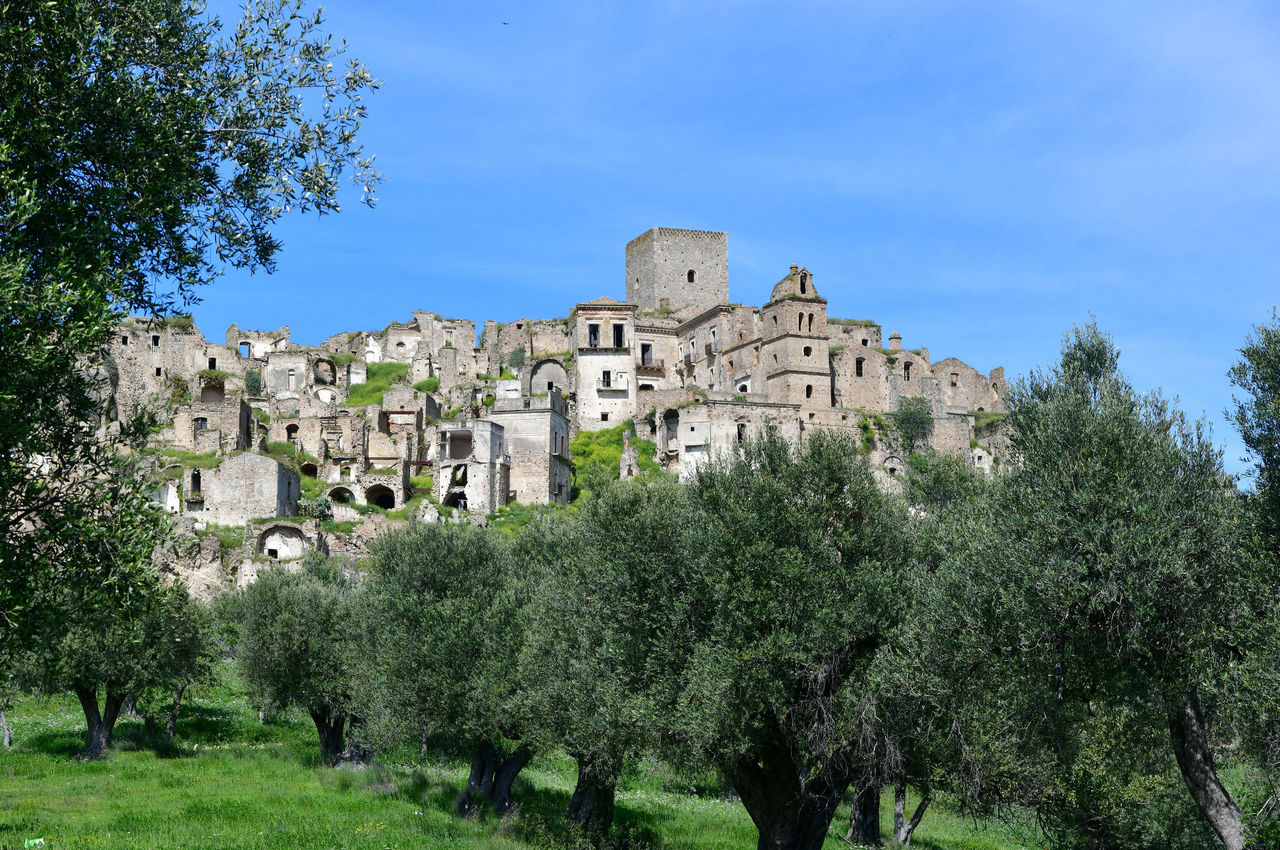
Due to a progressive and massive landslide of hydrogeological origin, triggered in the early 1960s also by incorrect infrastructural interventions on the water networks, the entire town was progressively evacuated between 1963 and 1974. The population was transferred downstream to the new settlement of Craco Peschiera. The particular clayey composition of the soil and the frequent landslides have made the area unstable, freezing the town at the exact moment of its abandonment.
The Urban structure
The village develops around the summit nucleus dominated by the Norman Tower (13th century) and the eighteenth-century noble palaces (Palazzo Grossi, Palazzo Carbone). The building fabric is made up of peasant houses in stone and mud bricks, connected by steep staircases that follow the crest of the rocky spur. All around, the landscape is dominated by gullies, deep incisions in the clayey soil produced by the erosion of rainwater, which give the site a lunar appearance.
Method of use (Scenic Museum Park)
For safety reasons related to the stability of buildings, access to the historic center of Craco is strictly regulated. It is possible to visit the ghost village only if accompanied by authorized guides, following a protected route secured by fences, wearing a protective helmet provided at the entrance. The site is a well-known international film location (it has hosted sets by directors such as Pier Paolo Pasolini, Mel Gibson and Francesco Rosi).
The Urban structure
The village develops around the summit nucleus dominated by the Norman Tower (13th century) and the eighteenth-century noble palaces (Palazzo Grossi, Palazzo Carbone). The building fabric is made up of peasant houses in stone and mud bricks, connected by steep staircases that follow the crest of the rocky spur. All around, the landscape is dominated by gullies, deep incisions in the clayey soil produced by the erosion of rainwater, which give the site a lunar appearance.
Method of use (Scenic Museum Park)
For safety reasons related to the stability of buildings, access to the historic center of Craco is strictly regulated. It is possible to visit the ghost village only if accompanied by authorized guides, following a protected route secured by fences, wearing a protective helmet provided at the entrance. The site is a well-known international film location (it has hosted sets by directors such as Pier Paolo Pasolini, Mel Gibson and Francesco Rosi).
-
Agriturismo Masseria Prichicca
Contrada Caccamone
74011 Castellaneta (TA) - Italy
Tel: +39 339 8171006
Email: info@masseriaprichicca.com
VAT: IT02232900734
CIN: IT073003B500124671 -
Contact Privacy Email Map Phone Whatsapp 
Credits: basilicatanet.com
 Sito Italiano